Case for Christ Kids · Lesson 1
Can We Trust the Bible?
Follow the evidence trail: real history, eyewitness testimony, careful copying, and God’s faithful Word.
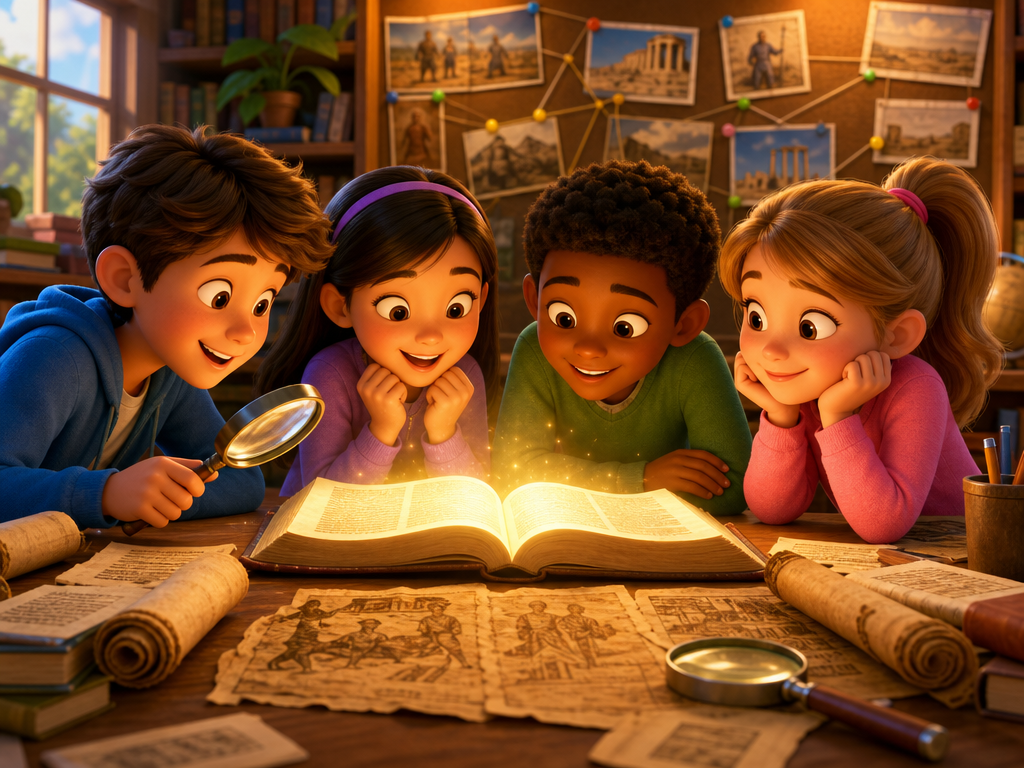
Big Question
Can we trust the Bible, or is it just a made-up story?
We can trust the Bible because God gave His Word, and He used real people, real history, eyewitness testimony, and careful copying to preserve it for us.
That does not mean every question is easy. It means Christians do not believe the Bible because we are pretending. We have good reasons to listen to it, study it, and build our lives on what God says.
This lesson does not ask kids to believe a thin answer like, “Just trust it.” It opens a case file: What kind of book is the Bible? Who wrote about Jesus? Were there witnesses? Were the words preserved carefully? What does Scripture say about itself?
Evidence means clues and facts that help us know whether something is true.
Case File
What would count as good evidence?
Some things can be proved with a measuring tape. History is different. For history, we ask: Did real people see it? Was it written close enough to the events? Did people preserve the message? Does it fit with what we know about the world? The Bible stands in that kind of historical light.
Not “telephone game” guessing
The New Testament was not passed down only by whispers. It was preached publicly, written down, copied, read in churches, and checked by people who cared deeply about the truth.
Witnesses could be questioned
Paul said more than five hundred people saw the risen Jesus, and many were still alive when he wrote. That is a bold claim if people could check it.
Copies help us check copies
Before printing presses, Christians copied Scripture by hand. When many old copies agree, and small differences can be compared, scholars can see what was written with strong confidence.
Faith is not pretending
Christians trust the Bible because God is truthful and because He gave real reasons in history. Faith is trust with reasons, not closing our eyes to hard questions.
Evidence Trail
Tap each clue card
Bible Anchor
Luke carefully checked the story
Inasmuch as many have undertaken to compile a narrative of the things that have been accomplished among us, just as those who from the beginning were eyewitnesses and ministers of the word have delivered them to us, it seemed good to me also, having followed all things closely for some time past, to write an orderly account for you, most excellent Theophilus, that you may have certainty concerning the things you have been taught.
Luke was not saying, “Believe this because I said so.” He was saying, “This has been carefully checked.”
All Scripture is breathed out by God and profitable for teaching, for reproof, for correction, and for training in righteousness
Scripture is not only a human book. God worked through human writers so His people would have His true Word.
For we did not follow cleverly devised myths when we made known to you the power and coming of our Lord Jesus Christ, but we were eyewitnesses of his majesty.
Peter says the apostles were not spreading clever myths. They were telling what they saw.
Then he appeared to more than five hundred brothers at one time, most of whom are still alive, though some have fallen asleep.
Paul pointed to living witnesses. In other words: “You can check this.” That is not how people usually talk when they are inventing a secret story.
Think It Through
Telephone vs. careful copy
Imagine your class wants to know what happened at recess. One student says, “I heard a wild story from someone who heard it from someone else.” Another says, “I was there. I saw it. I wrote it down the same day. Other people who were there can tell you too.” Which report should you take more seriously?
Try this activity: whisper a sentence around the room, then compare it with written copies of the same sentence. Suggested sentence: “Luke carefully checked what eyewitnesses said about Jesus.” Written copies are easier to compare and check.
Important difference: the Bible is not like one whisper traveling through a long line. It is more like many careful written copies spread through many places. If one copy has a small mistake, the other copies help us notice and correct it.
Honest Answers
What about hard questions?
Trusting the Bible does not mean every question disappears in five seconds. It means we bring questions into the light instead of hiding them. Christians can study ancient languages, manuscripts, history, archaeology, and theology because all truth belongs to God.
- Translations: The Bible was written mostly in Hebrew, Aramaic, and Greek. Good translations help us read those words in our language.
- Copying differences: Handwritten copies sometimes have small differences, but comparing many copies helps scholars see what was originally written.
- Miracles: If God made the world, then miracles are not impossible. The question is whether God gave good witnesses.
- Faith: Biblical faith is not make-believe. It is trusting the God who tells the truth.
Detective Check
Choose the strongest answer
What is an eyewitness?
What is a manuscript?
Why do many manuscripts help scholars?
What should we do when we have honest questions about the Bible?
Parent / Teacher Guide
Guide honest questions into the light
- Faith does not mean believing with no reasons. Faith means trusting God, and God has given us good reasons.
- Questions are not something to hide. Honest questions can help children learn truth with humility.
- If children ask about translations, explain that the Bible was first written mostly in Hebrew and Greek. Good translations may use slightly different English words while teaching the same truth from the original manuscripts.
Father, thank You for giving us Your Word. Help us listen carefully, ask honest questions, and trust what is true. Thank You for sending Jesus and for preserving the good news about Him. Teach us to love Your Word and obey You with glad hearts. In Jesus’ name, amen.
← Back to Lessons